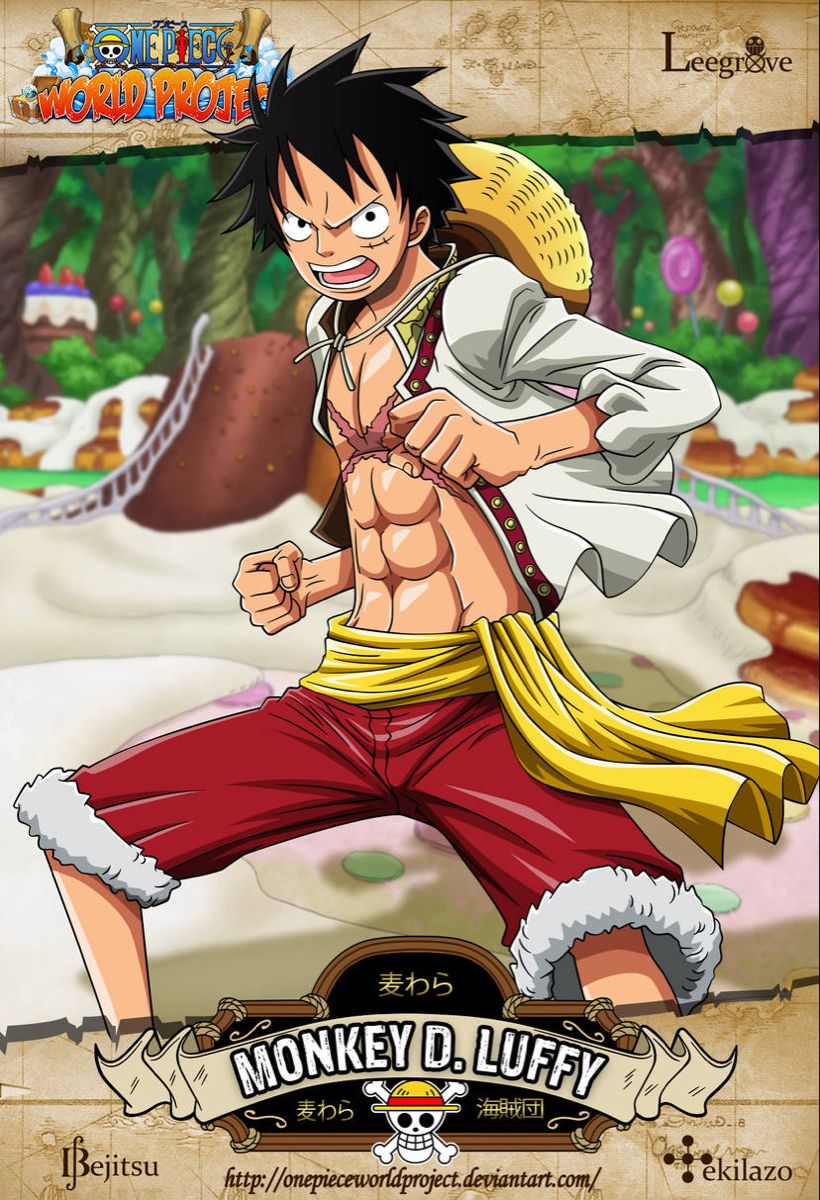
Biography
Born in a small port village, Luffy’s childhood was marked by an infectious love of adventure and a stubborn moral clarity. As a child he admired pirates not for lawlessness but for freedom incarnate people who answered only to the ocean and their dreams. After eating a Devil Fruit that made his body rubber, Luffy found himself both limited (no swimming) and liberated (impossible stretch and resilience). That odd gift reshaped his destiny: the rubber body amplified his reckless courage and made him a living instrument of impossible schemes.
Luffy’s past is less about trauma than about encounters that taught him to trust people. His mentor gave him a straw hat and a charge: become Pirate King. The hat became a talisman, a contract of responsibility that Luffy honors with an almost religious simplicity. He recruits crewmates not by promise of treasure but by the simple offer of companionship on the sea. This makes his leadership strange and powerful: he forms loyalty by being wholeheartedly himself.
Role in the Story
Luffy’s role is both engine and barometer: where he goes, the story follows; what he values becomes a test for the world. He compels others to choose between complacency and action. His fights are dramatic but often theatrical the real drama is about what he won’t sacrifice: friends, innocent lives, and the right to dream.
Contribution to Plot
Practically, Luffy’s victories topple regimes, liberate islands, and shift balances of power. Symbolically, his rise challenges the legitimacy of the world order: if one man’s dream can upend the status quo, then the established powers must answer for their crimes.