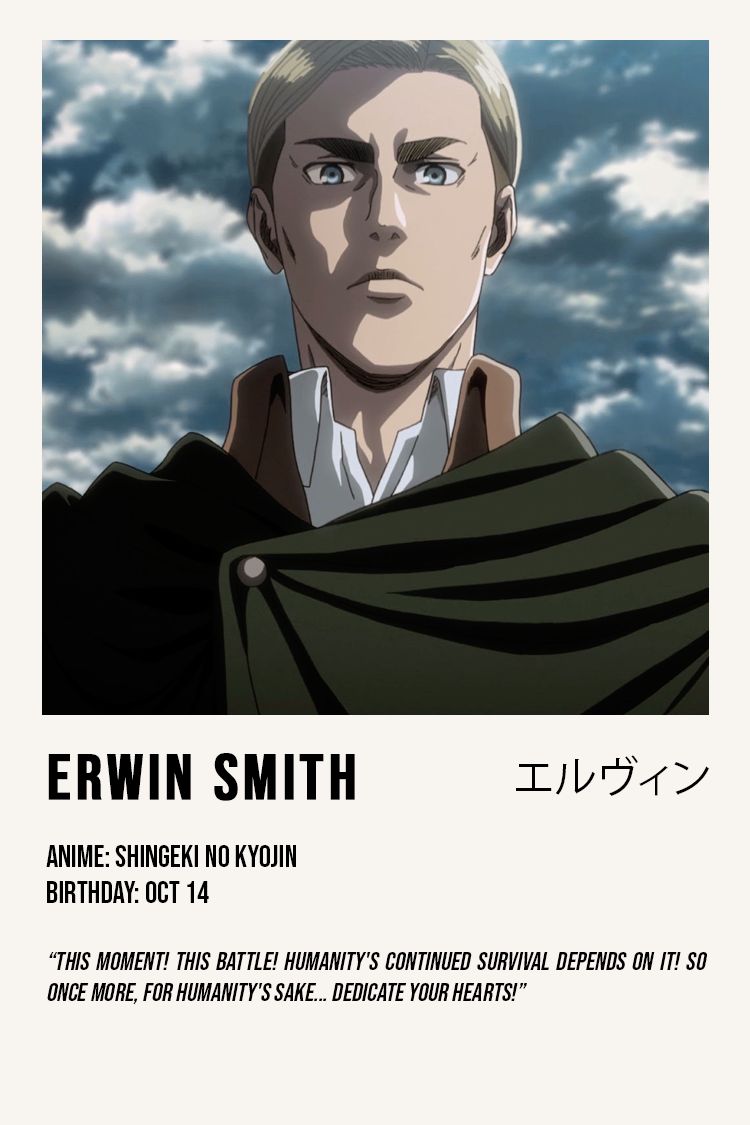
Biography
Erwin is a cunning strategist shaped by the necessity of survival. From an early point his mind is oriented toward systems: how to read politics, how to exploit weakness, how to marshal sacrifice for strategic gain. Unlike soldiers whose acts are immediate and physical, Erwin’s work is chess: he moves pieces, foresees consequences, and accepts moral compromises as a grim calculus.
His personal cost is high: his decisions require that some lives be gambled to save others. That burden makes him a tragic figure admired for vision, condemned by those who measure fairness by the cost exacted.
Role in the Story
Erwin is the architect of major expeditions, a leader who privileges long-term victory over immediate comfort. He forces soldiers to ask whether the future they are promised is worth present suffering. His leadership galvanizes the Survey Corps into action and clears paths to truth by taking risks that others will not.
Simultaneously, his moral posture willingness to ask others to die for a greater plan highlights the story’s exploration of sacrifice and whether ends can justify means.
Contribution to Plot
Erwin’s plans produce pivotal breakthroughs in revealing the world beyond the walls and uncovering hidden conspiracies. His expeditions open the narrative from closed survival to large-scale geopolitical conflict.
Yet the cost of his triumphs is measured in the corpses of those who follow, and the story interrogates whether such calculus is ever morally permissible.